News
A Suburban Tragedy With a Predictable Pattern
Friday, April 3rd, 2026
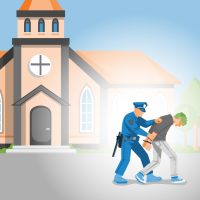
Recent news out of a suburb of Kansas City has once again highlighted a difficult but critical truth: even in trusted environments, gaps in screening, training, and oversight can lead to serious harm.
In this case, a youth leader was charged with multiple child sex crimes involving a minor connected to the organization. According to reports, the alleged relationship began over time and continued in settings that should have been safe, including during organized activities and in spaces meant for youth programming.
This situation is devastating but it’s not isolated. And more importantly, it’s not unpredictable. It’s preventable.
The Pattern We Can’t Ignore
Cases like this often follow a similar trajectory:
- An individual in a position of trust gains access to youth
- Boundaries are gradually crossed over time
- Lack of oversight or documentation allows behavior to continue
- Intervention happens only after harm has already occurred
The hard truth is it’s rarely one big failure; it’s a series of small gaps.
Where Organizations Get It Wrong
Most organizations don’t ignore safety; they just underestimate what it takes.
Here’s where breakdowns commonly happen:
1. Screening Isn’t Thorough or Ongoing
A one-time background check or a low-level background check is not enough. Risks evolve, and so should your process.
2. Training Is Treated as Optional
If volunteers or staff can “show up and help” without completing training, your system is already compromised.
3. Policies Exist, but Aren’t Enforced
Having policies isn’t protection. Consistent enforcement is.
4. Lack of Supervision and Accountability
Unmonitored environments create opportunity. And opportunity is where risk lives.
Screen. Educate. Protect.
This is where Safe Gatherings’ core approach matters most, not as a tagline, but as a framework.
Screen
Every individual who interacts with minors should be properly vetted, consistently and thoroughly through a high multi-level background screening.
Educate
Training isn’t a checkbox. It equips people to:
- Recognize grooming behaviors
- Understand boundaries
- Respond appropriately to concerns
Protect
Protection happens through:
- Clear policies
- Documented processes
- Active supervision
- A culture of accountability
The Real Takeaway
This isn’t about one organization in a suburb of Kansas City. It’s about every organization that serves children. Because the question isn’t “Could this happen here?”, It’s “What gaps exist right now that could allow it?”.
What You Can Do Today
Start simple, but start now:
- Review your current screening process
- Confirm every volunteer is trained before serving
- Identify where supervision may be lacking
- Make sure your policies are not just written, but followed
Final Thought
Stories like this are hard to read and even harder to talk about. But they serve a purpose. They remind us that protecting children doesn’t happen by intention alone. It happens through systems, consistency, and action.
Screen. Educate. Protect.